

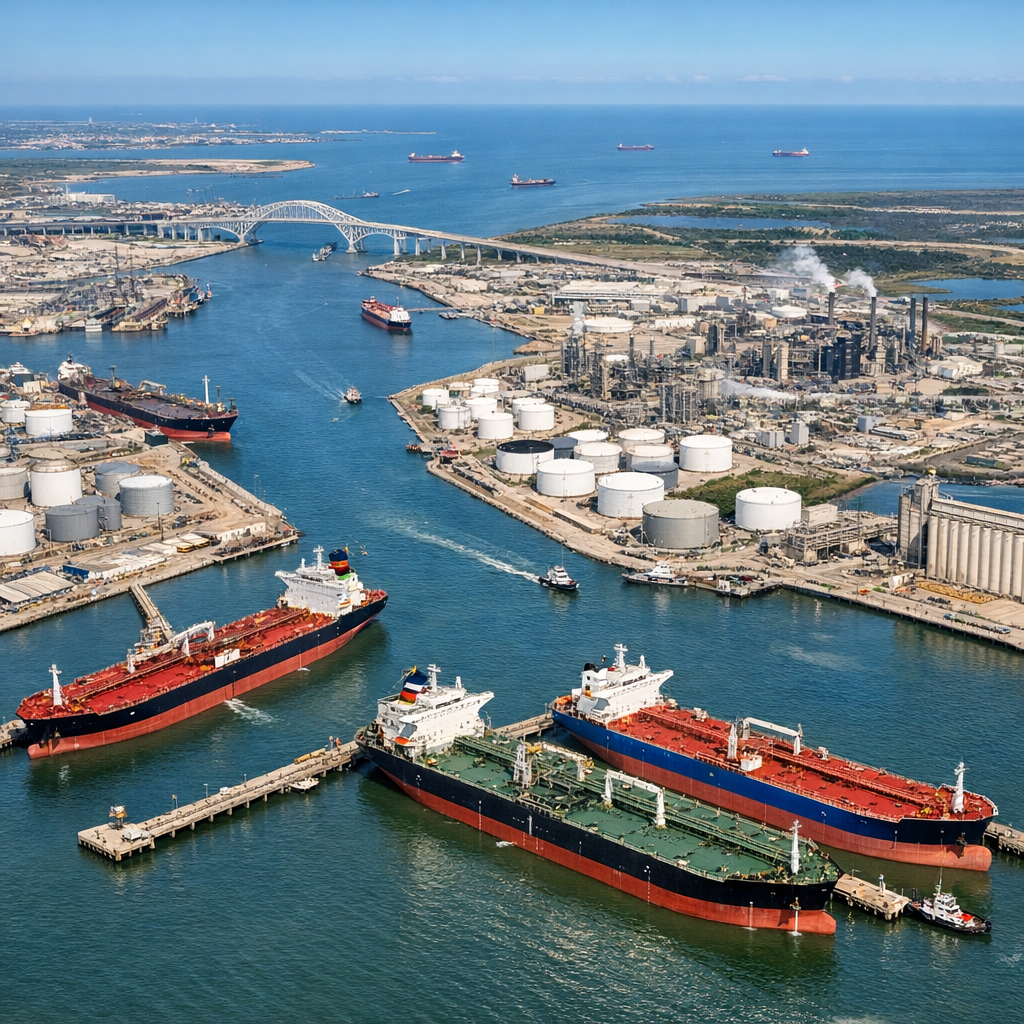
Corpus Christi, a vital hub for the U.S. energy industry, is currently navigating significant challenges due to a combination of global events and local environmental factors.
Water Crisis Amidst Drought
The city has been grappling with a prolonged drought that has severely depleted its water reservoirs. This situation has been exacerbated by the cancellation of a proposed seawater desalination plant, initially intended to meet the growing water demands of the expanding industrial sector. Without additional water sources, officials warn that Corpus Christi could face an emergency situation by December 2026, potentially necessitating a 25% reduction in water usage for large industrial users. Such measures could lead to operational disruptions within the energy sector, affecting both local and national economies.
Global Energy Dynamics and Local Impact
On the global stage, geopolitical tensions have led to disruptions in traditional energy supply routes. Notably, blockades in the Strait of Hormuz have impeded Middle Eastern oil exports, resulting in a surge in U.S. crude exports. The Port of Corpus Christi has played a pivotal role in this shift, with ship calls in March exceeding 240, a significant increase from the usual 200. This uptick underscores the port’s strategic importance in maintaining global energy stability.
Balancing Growth and Sustainability
While the increased activity at the Port of Corpus Christi highlights its global significance, it also places additional strain on the city’s already limited water resources. The challenge lies in balancing the demands of a booming energy sector with the need for sustainable water management practices. As Corpus Christi continues to play a crucial role in the global energy landscape, addressing these intertwined issues remains paramount for the city’s future resilience and prosperity.